Pulleys: count the ropes
One pulley changes the direction of your pull. Several together make it lighter.
How this site works. Every fact is in our own words and linked to its source, beside it. Where good sources disagree, we show each version in a “Sources differ” box.
A pulley is a wheel that carries a rope, cord, cable, chain or belt on its rim. Pulleys with grooved rims are called sheaves. Britannica
Pulleys, the blocks that hold them and the rope together are called a block and tackle. Britannica
Science Trek calls the pulley a version of the wheel and axle combined with a rope or chain. Science Trek
One pulley, two, four
A single fixed pulley has a mechanical advantage of 1: it doesn’t reduce the force, it changes its direction. OpenStax
For a pulley system, the mechanical advantage is roughly the number of rope sections holding up the load: 2, 3, 4 and so on. OpenStax
The catch, as ever: with four ropes holding the load, you pull four metres of rope to lift it one metre (our arithmetic, ignoring friction).
Where you’ll find them
Pulling down on a flagpole rope to raise the flag is a single pulley at work: down here, up there. Science Trek
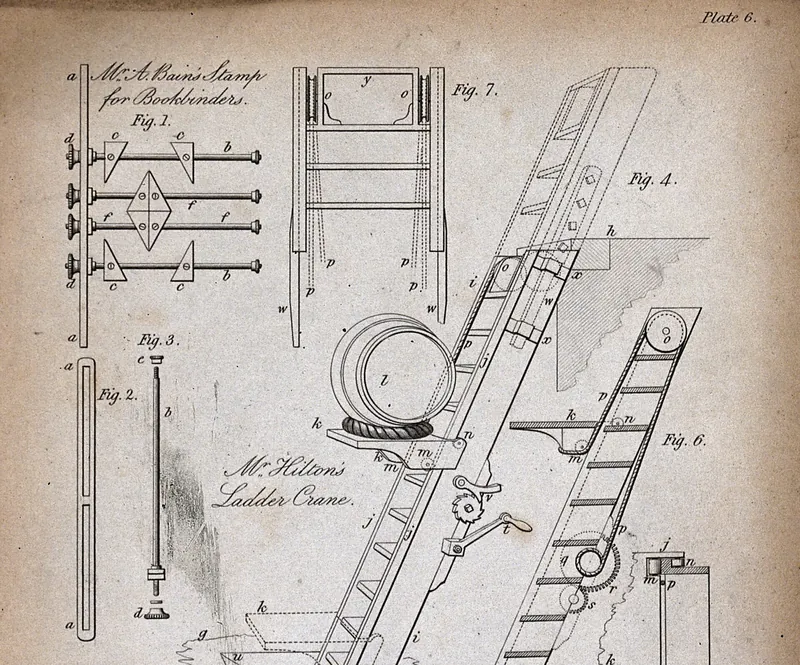
Pulleys work window blinds, raise sails, lift cargo and cranes, and move lifts between floors. Science Trek
History
The pulley goes back to Mesopotamia in the second millennium BCE, according to the Ohio University history. Ohio Univ.
Archimedes is reported to have used compound pulleys to pull a ship onto dry land. Britannica
Plutarch also tells how Archimedes, holding the end of a pulley system in his hand, drew a loaded ship towards him in a straight line. MacTutor
Next: the inclined plane →