Picture credits
The drawings are our own. The photos are from Wikimedia Commons, under Creative Commons licences (Attribution, or Attribution-ShareAlike), CC0, or in the public domain.
Photos
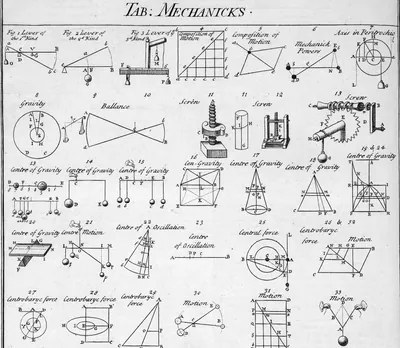 Table of Mechanicks, Cyclopaedia, Volume 2.jpg
by Fletcher (engraver), for Ephraim Chambers’s Cyclopaedia, Public domain. Cropped and resized; no other changes.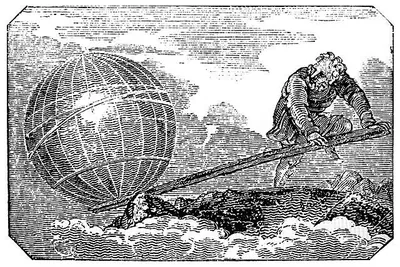 Archimedes lever (Small).jpg
by Mechanics Magazine, Public domain. Cropped and resized; no other changes.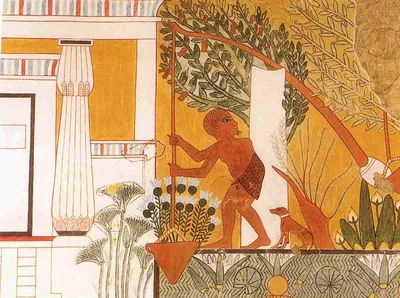
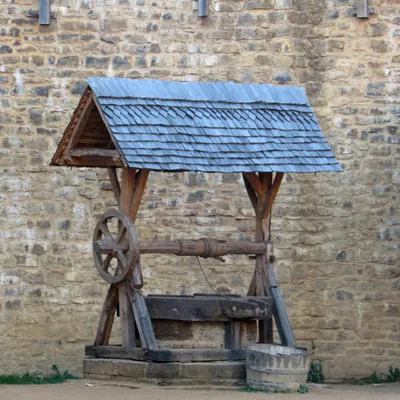 Guedelon trip 059 - 2026-10-31.jpg
by Benjamín Roldán Avendaño, CC0. Cropped and resized; no other changes.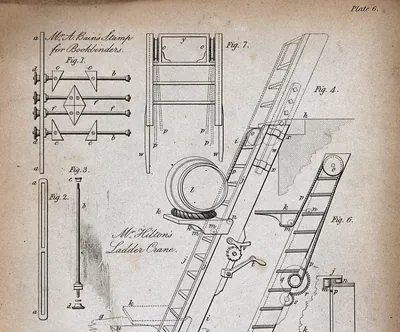 Engineering; lifting gear with block and tackle. Engraving b Wellcome V0024550.jpg
by T. Bradley (engraver), Wellcome Collection, CC BY 4.0. Cropped and resized; no other changes.
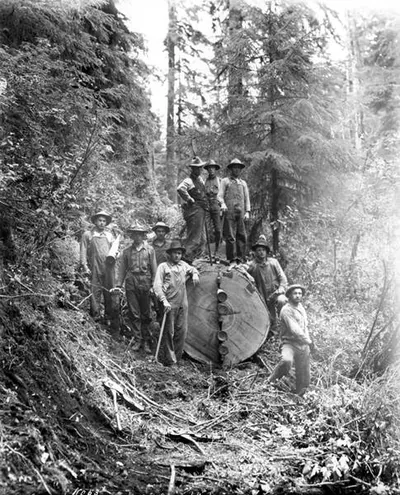 Loggers splitting log with wedges, Warren Spruce Company, ca 1918 (KINSEY 2611).jpeg
by Clark Kinsey, Public domain. Cropped and resized; no other changes.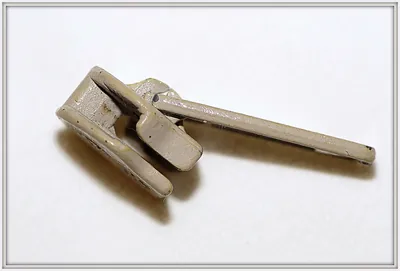 Zipper slider (39587488625).jpg
by Rolf Dietrich Brecher, CC BY 2.0. Cropped and resized; no other changes.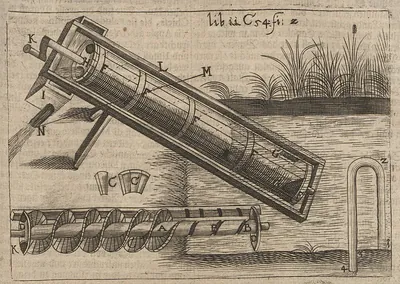 Fotothek df tg 0007777 Wasserwirtschaft ^ Wasserförderung ^ Schraube.jpg
by Deutsche Fotothek, Public domain. Cropped and resized; no other changes. Justus Sustermans - Portrait of Galileo Galilei, 1636 (cropped).jpg
by Justus Sustermans, Public domain. Cropped and resized; no other changes. Man lopend met een volle kruiwagen, RP-P-OB-30.687.jpg
by Rijksmuseum, CC0. Cropped and resized; no other changes.
Our own drawings
- Six small drawings in a grid: a lever on a triangular fulcrum lifting a box; a spoked wheel on an axle; a pulley wheel hanging from a beam with a rope and a box; a box being pushed up a ramp; a wedge pushed down into a block of wood, with arrows pushing the two halves apart; and a screw with a slanting thread.
Our own drawing - Three levers, one above the other. First class: the fulcrum triangle in the middle, the load at the left end and the effort arrow pushing down at the right end, for a seesaw, crowbar or scissors. Second class: the fulcrum at the left end, the load in the middle and the effort lifting at the right end, for a wheelbarrow, nutcracker or bottle opener. Third class: the fulcrum at the left, the effort in the middle and the load at the right end, for tweezers, tongs, a fishing rod or your forearm.
Our own drawing - A big wheel with a small axle in its centre. A rope from the rim of the wheel carries a small pull downwards; a rope from the axle holds up a load. The wheel’s radius is marked R and the axle’s radius r. Beside it: mechanical advantage equals R divided by r; with a wheel four times the axle, you pull with a quarter of the force, but your hand goes round four times as far.
Our own drawing - Three pulley set-ups hanging from a beam. Left: one fixed pulley, one rope section holding the load, mechanical advantage 1, the same force in a new direction. Middle: a fixed pulley and a moving pulley attached to the load, two rope sections holding it, mechanical advantage 2, half the force and twice the length of pull. Right: two fixed and two moving pulleys, four rope sections holding the load, mechanical advantage 4, a quarter of the force and four times the pull.
Our own drawing - A ramp rising from left to right with a box partway up. An orange arrow pushes the box along the slope, labelled small push, long way. A dashed blue arrow beside the high end goes straight up, labelled big lift, short way. Caption text: same height, same work, ignoring friction; a longer, gentler ramp means less force and more distance.
Our own drawing - A blue wedge being pushed down into a split block of wood. An arrow on top pushes down; two arrows at the sides push the halves of the block apart. A note says a long, thin wedge means an easier push.
Our own drawing - Left: a right-angled paper triangle with its sloping edge drawn in orange, labelled a paper triangle, a ramp. An arrow says roll it. Right: a pencil with the orange edge spiralling round it, labelled the slope becomes a thread.
Our own drawing - Three pairs of bars for lifting the same load to the same height. No machine: a long orange force bar and a short blue distance bar. Mechanical advantage 2: the force bar half as long, the distance bar twice as long. Mechanical advantage 4: the force bar a quarter as long, the distance bar four times as long. Force times distance, the work, is the same in every row.
Our own drawing
The drawings are simplified teaching drawings, not to scale, made from the sourced descriptions on this site. Useless the eraser is the network’s own mascot. Fonts: Bricolage Grotesque, Newsreader and Kalam (SIL Open Font Licence), served from this site.