From digging sticks to Galileo
People used simple machines for thousands of years before anyone made a list of them.
How this site works. Every fact is in our own words and linked to its source, beside it. Where good sources disagree, we show each version in a “Sources differ” box.
Ancient tools
All early people used the lever in some form, for moving heavy stones or as digging sticks. Britannica
Wedges were used in prehistoric times to split logs and rocks. For rocks, wooden wedges were wetted so they would swell. Britannica
Ramps were probably used during the construction of the Egyptian pyramids. OpenStax
The ancient Greeks’ understanding of simple machines was limited to statics, forces in balance, and did not include the idea of work. Ohio Univ.
Archimedes and Hero
Archimedes studied three machines: the lever, the pulley and the screw. Acta Baltica
It credits Archimedes, in the third century BCE, with first developing the idea of mechanical advantage. Ohio Univ.
Hero’s five machines: sources differ
- The Greek engineer Hero of Alexandria described five simple machines: the lever, the pulley, the wheel, the wedge and the screw. Univ. of Oklahoma
- Another history lists Hero’s five as the winch, lever, pulley, wedge and screw. Acta Baltica
The “wheel” and the “winch” are the same idea, a wheel and axle used for winding, but the two sources name it differently.
The Renaissance makes it six
The six simple machines were classified during the Renaissance. Ohio Univ.
In 1577 Guidobaldo del Monte showed that all five of Hero’s machines could be worked out from the principle of the lever. Univ. of Oklahoma
Guidobaldo del Monte was one of Galileo’s patrons; Galileo taught at Padua from 1592 to 1610. Britannica
Who added the inclined plane? Sources differ
- Galileo, in Le Mecaniche, added the inclined plane, so the number of simple machines became six. Acta Baltica
- In 1586 the Flemish mathematician Simon Stevin worked out the mechanical advantage of the inclined plane. Ohio Univ.
- Stevin (1548–1620) published his triangle of forces in De Beghinselen der Weeghconst (1586), the start of a new kind of statics. Britannica
Both sources agree the ramp joined Hero’s five around 1600. They credit different people: Galileo, who added it to the list, and Stevin, who worked out its mechanical advantage first.
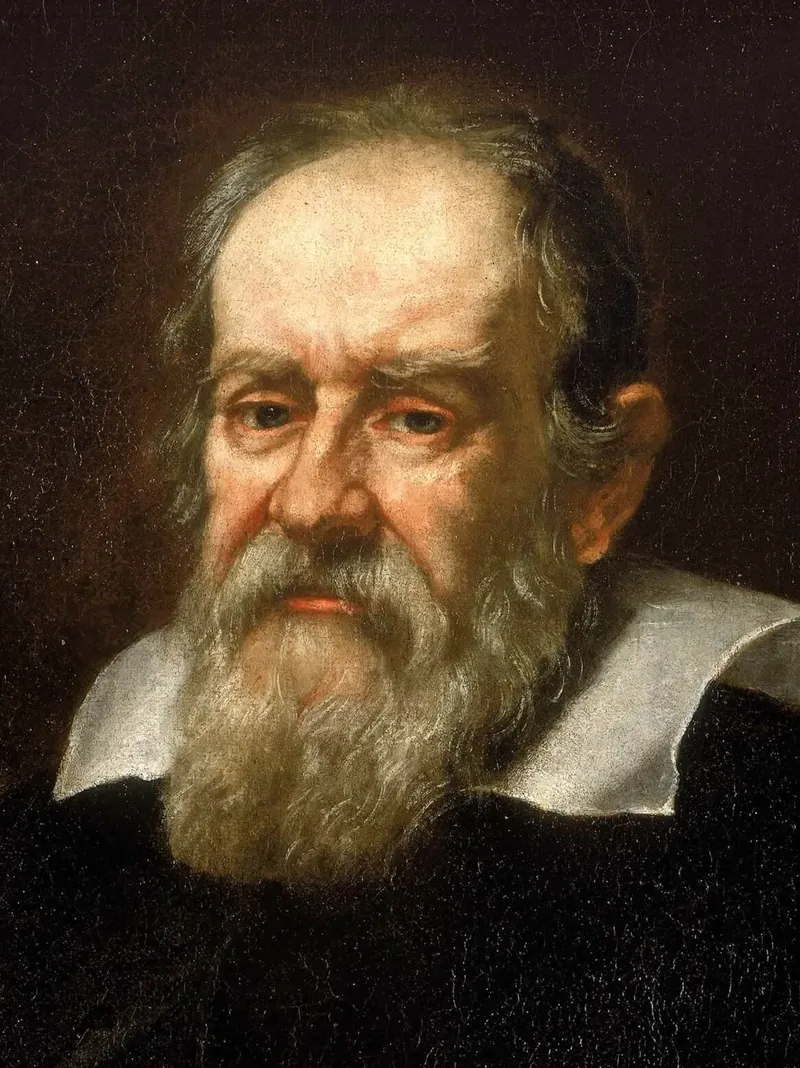
In Le Meccaniche, around 1600, Galileo was the first to show that simple machines do not create energy, only transform it. Ohio Univ.
Timeline
- Prehistoric The same history calls the wedge ancient (think stone hand axes) and the ramp prehistoric, used to move heavy masses. Ohio Univ.
- About 5000 BC A balance beam for weighing, a bar pivoted at its centre, was probably used in Egypt in about 5000 BC, says Britannica. Britannica
- 5th millennium BCE The lever goes back to the Near East in the fifth millennium BCE, according to the Ohio University history. Ohio Univ. The wheel and axle goes back to Mesopotamia in the fifth millennium BCE, according to an Ohio University history of mechanisms. Ohio Univ.
- 2nd millennium BCE The pulley goes back to Mesopotamia in the second millennium BCE, according to the Ohio University history. Ohio Univ.
- As early as 1500 BCE The shadoof is a long lever with a water container on the short arm and counterweights on the long arm; it is said to have been used in Egypt and India as early as 1500 BCE. Britannica
- 5th century BC Archytas of Tarentum, in the 5th century BC, is the alleged inventor of the screw. Britannica
- 3rd century BCE Archimedes studied three machines: the lever, the pulley and the screw. Acta Baltica
- 1st or 2nd century BC The screw press was probably invented in Greece in the 1st or 2nd century BC. Britannica
- Hero of Alexandria The Greek engineer Hero of Alexandria described five simple machines: the lever, the pulley, the wheel, the wedge and the screw. Univ. of Oklahoma
- 1577 In 1577 Guidobaldo del Monte showed that all five of Hero’s machines could be worked out from the principle of the lever. Univ. of Oklahoma
- 1586 In 1586 the Flemish mathematician Simon Stevin worked out the mechanical advantage of the inclined plane. Ohio Univ.
- About 1600 In Le Meccaniche, around 1600, Galileo was the first to show that simple machines do not create energy, only transform it. Ohio Univ.
Dates for the earliest machines are estimates and vary between sources; we give each source’s own wording.