Simple machines around the house
You probably used a dozen simple machines before breakfast.
How this site works. Every fact is in our own words and linked to its source, beside it. Where good sources disagree, we show each version in a “Sources differ” box.
In the kitchen
- Bottle opener: a lever. In a second-class lever the load is between the fulcrum and the effort: wheelbarrows, nutcrackers and some bottle openers. BBC Bitesize
- Jar lid: a screw. Screws are in jar lids, drills, bolts, light bulbs, taps, bottle caps and ball-point pens, and a spiral staircase is a kind of screw. Science Trek
- Knife: a wedge. Knives, axes, needles, scissor blades and ice picks are wedges that separate. Science Trek
- Tongs: a third-class lever. In a third-class lever the effort is between the fulcrum and the load: tweezers, tongs and fishing rods. BBC Bitesize
- Nutcracker: two levers. A nutcracker is two levers joined at a pin: if the handle is three times as far from the pin as the nut, your squeeze is multiplied three times. Britannica
Scissors
A pair of scissors is a double first-class lever, with the pivot screw as the fulcrum. Illinois State Univ.
Scissors are a compound machine: the edges of the blades are wedges, joined to make a lever. Science Trek
Doors
- Door handle: it depends on the handle; see the box below.
- Doorstop: a wedge. Wedges also hold things in place: staples, drawing pins, nails, doorstops and shims. Science Trek
- Hinges and light switches: levers. Levers are all around us: door handles, the claws of a hammer, crowbars, light switches, bottle openers and hinges. Science Trek
Door handles: sources differ
- A doorknob is a wheel and axle. Try turning the bare square shaft with your fingers once the knob is off: it is tough work. US Navy
- Levers are all around us: door handles, the claws of a hammer, crowbars, light switches, bottle openers and hinges. Science Trek
Clothes
A zip uses two ancient tools, the wedge and the hook: the slide holds a set of wedges that push the teeth together or force them apart. Indiana Public Media
Garden and street
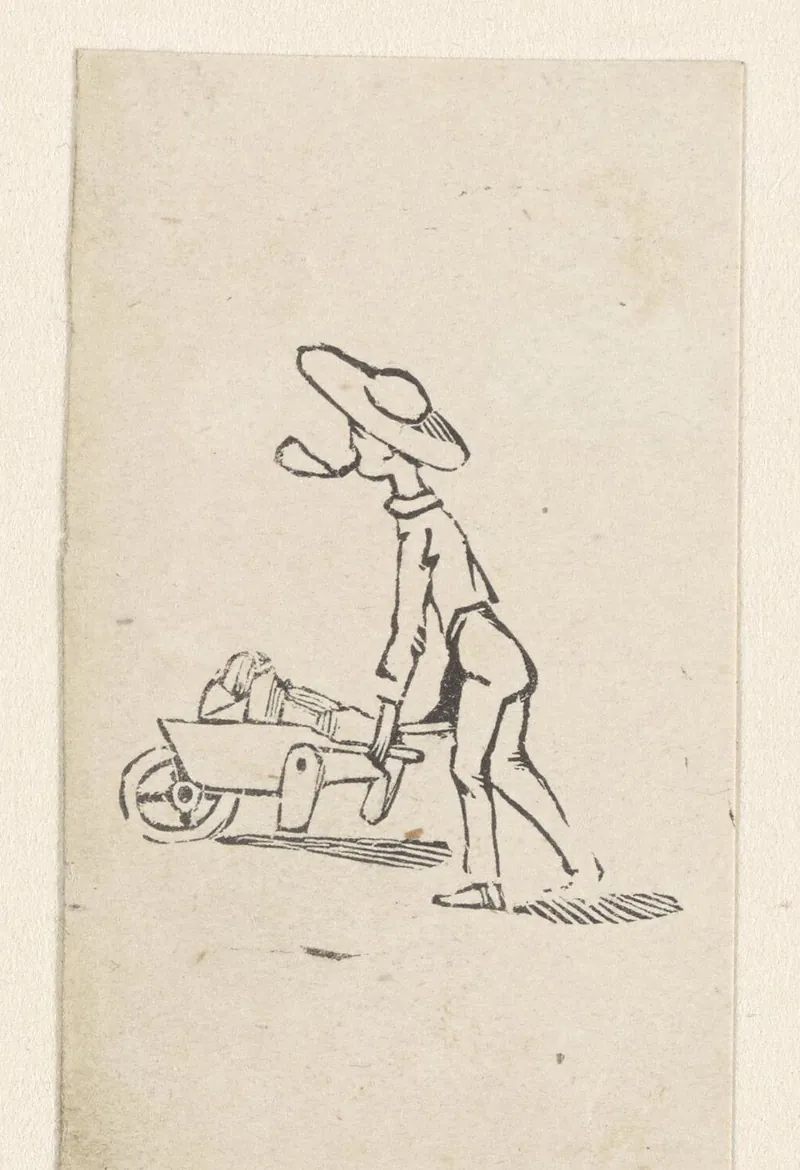
- Wheelbarrow: a second-class lever. In OpenStax’s worked wheelbarrow example, the load sits 7.50 cm from the wheel’s axle and your hands 1.02 m from it. OpenStax
- Ramps and steps: inclined planes. Stairs, escalators, ladders, wheelchair ramps and even mail chutes are versions of the ramp. Science Trek
- Shovel: a lever that trades force for reach. A shovel is a lever with a mechanical advantage of less than one: it gives up force to gain speed and distance at the blade. OpenStax
- Flagpole: a pulley. Pulling down on a flagpole rope to raise the flag is a single pulley at work: down here, up there. Science Trek
Your own body
Your forearm is a third-class lever: the muscle pulls between the elbow and the hand. Illinois State Univ.
Can you spot them yourself? Try the spot-the-machine challenge.